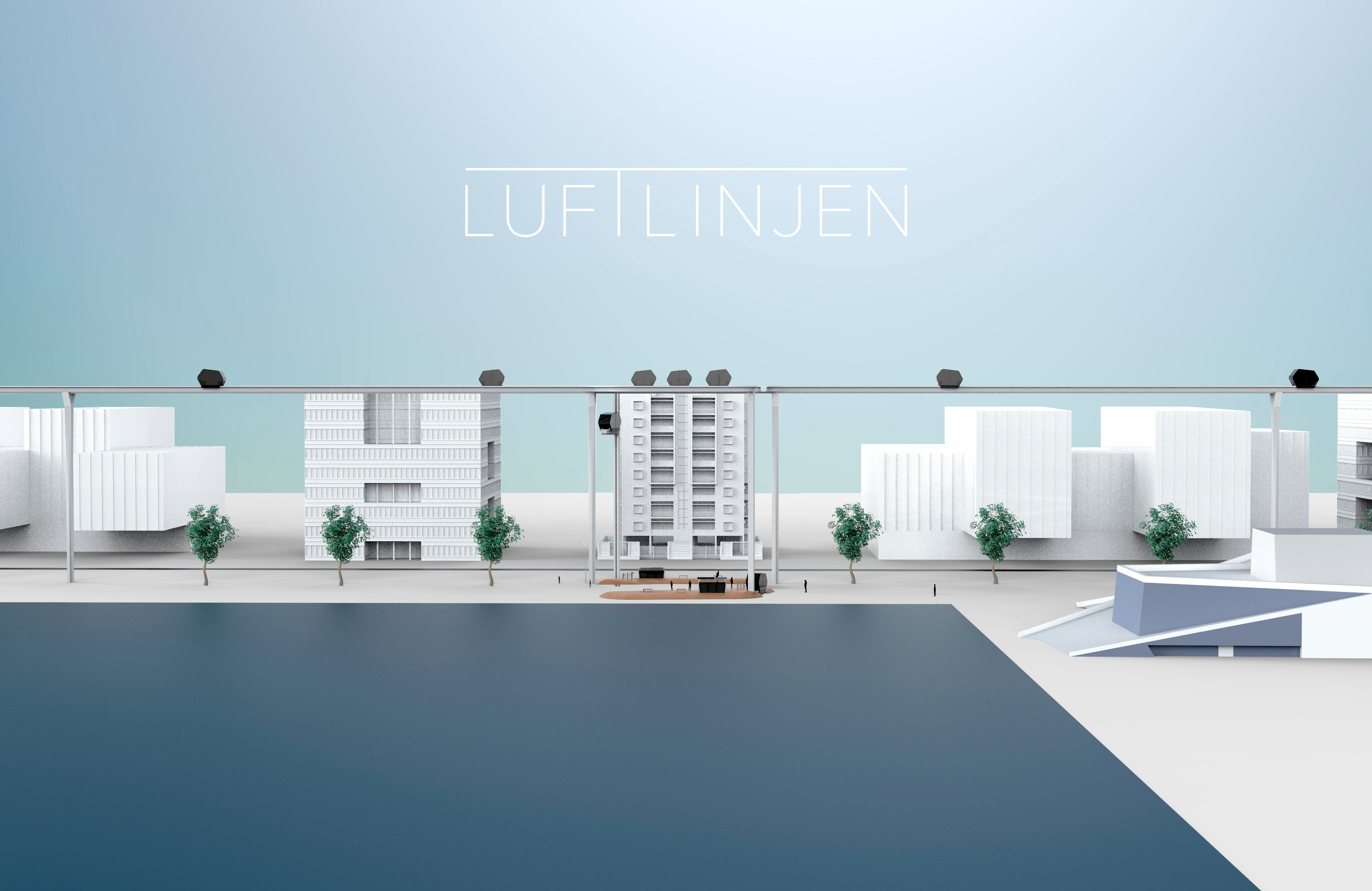
Visit for full project report (in Norwegian): https://www.calameo.com/read/005831315b8d9277c2ece
Concept study on the future of personal transportation in Oslo.
Introduction to System Oriented Design. "Luftlinje" = Air Fly Distance.
This project is about city planning and maintenance in Oslo. Our given task was to define a problem area and challenge that with a three folded concept; a product, interaction to the product and the service itself. Our research quickly lead to information on how Oslo will deal with pollution and sustainability regarding the "car free sentrum" plan. How will a car free sentrum affect the citizens, tourists and the people that travel here everyday for work?
The amount om citizens in Oslo is rising and the city is expanding. Public transport systems are getting overloaded. The government has ordered new trams for Oslo, we are getting more services like citybikes and electric scooters. Thinking 5-10 years ahead, how will the plan of a car free sentrum affect the public transportation systems?
Luftlinjen" is an autonomous passenger transport system. We wanted to challenge how people transport them self in urban societies. By focusing on city experience, efficiency, transportation and interaction, we have designed a new way to travel. Instead of using the streets that will, evetually, be car-free, we have explored the possibilities of using airspace. This will make room for a "greener" ground level and work as an attraction for Oslo City.
The system is based on MagLev rails, using Magnetism as power source. Lifting the transportation up in the air gives people a new look at Oslo. This technology is much used in modern speed trains.
7 Weeks
GK5
Designers: Kristian Haugvik, Vilde Brabrand Urfjell, Agata Cypriak vel Czupryniak, Lisa Siegel, Kevin Ehrenberg, and Hans Kristian Villa
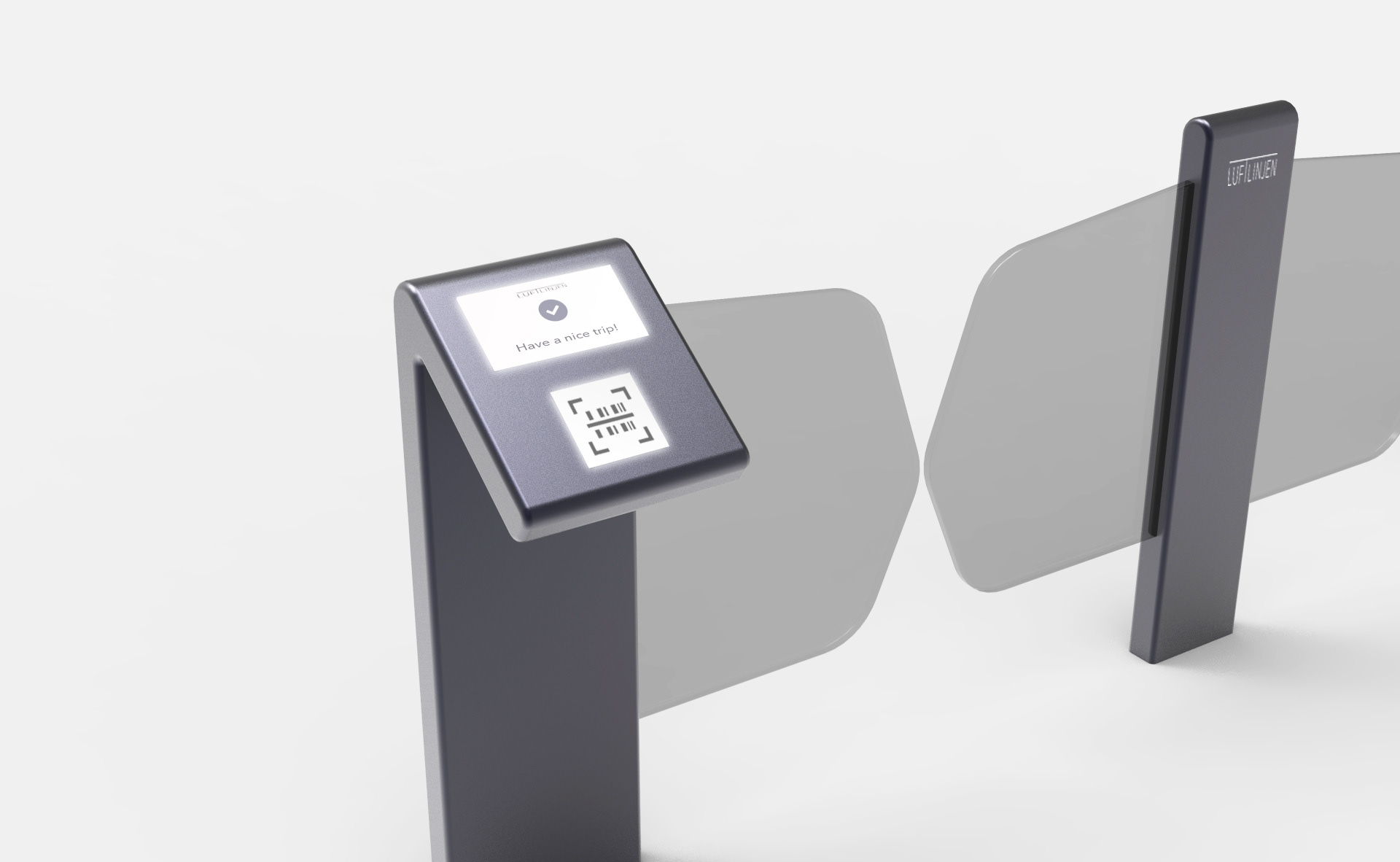
Ticket scanners with sliding doors.
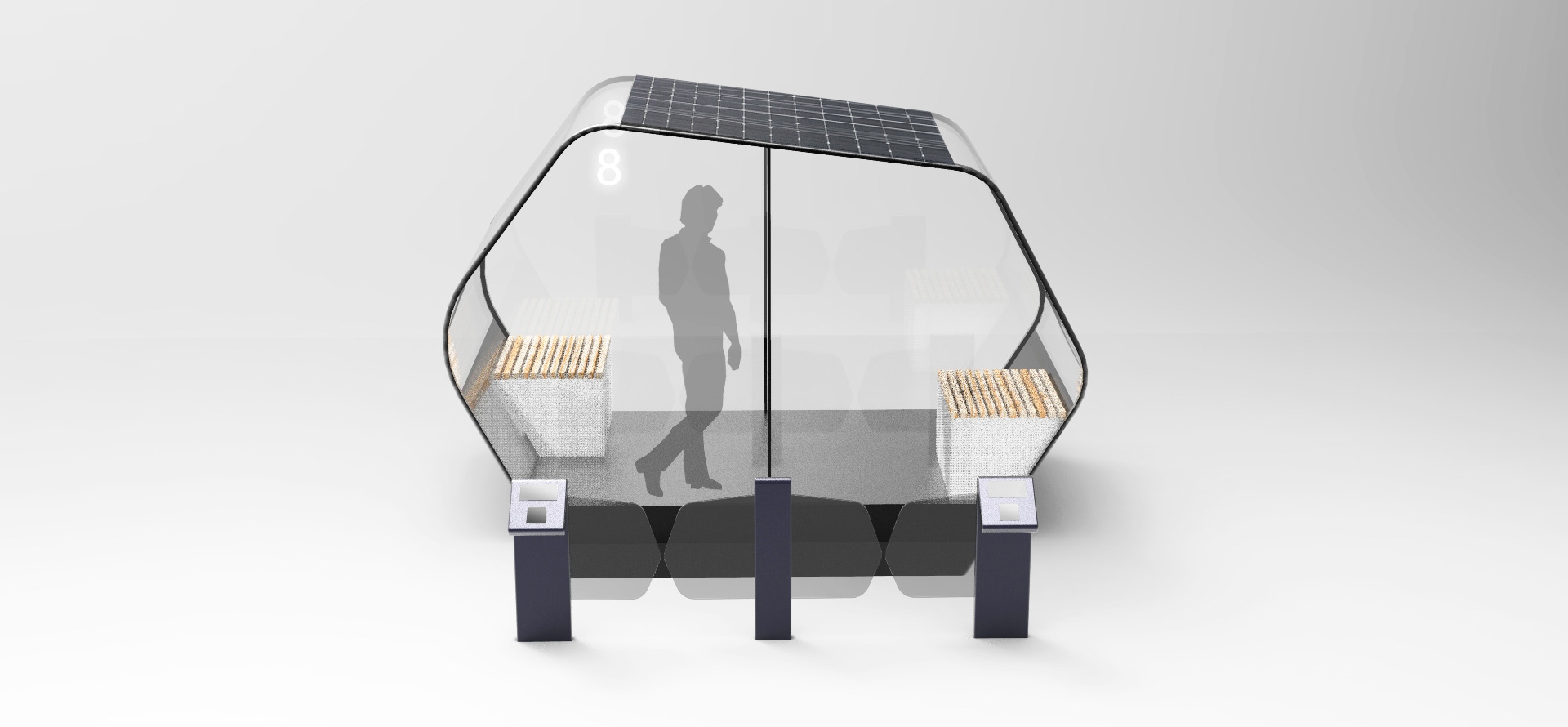
Luftlinjen wagon.
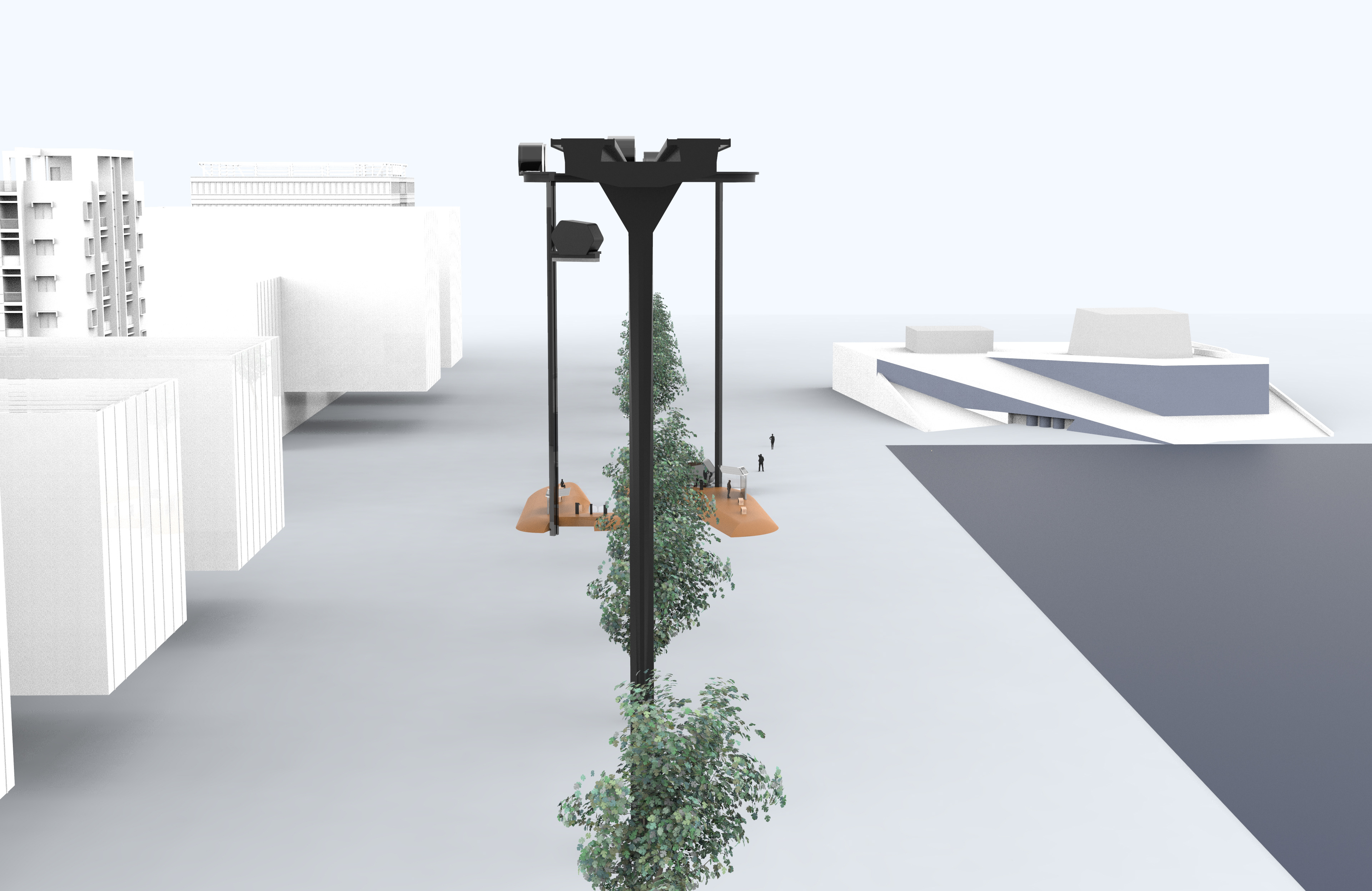
Track from side perspective
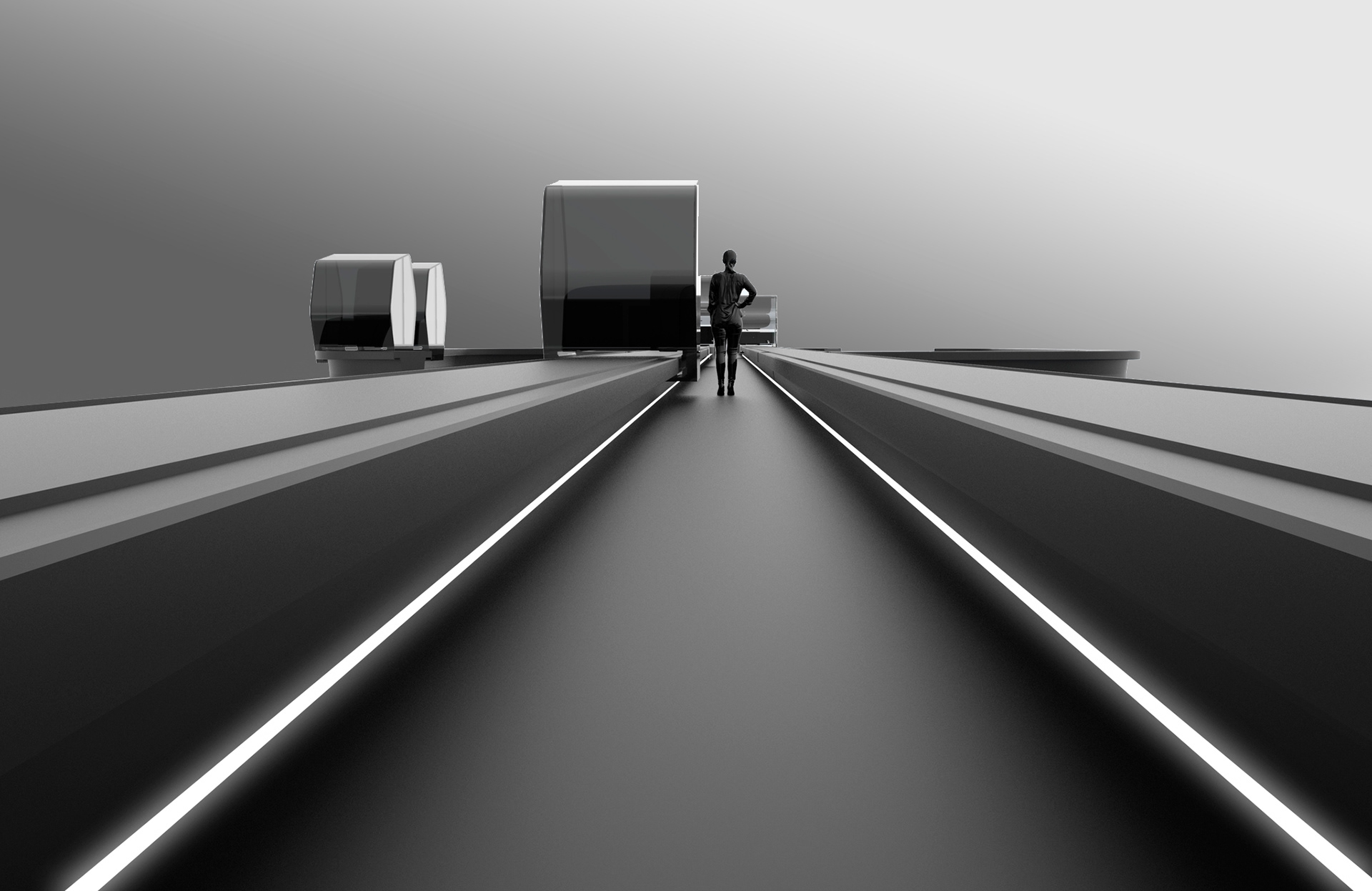
The track is designed to give room for passengers in emergency situations. Between the two directions of wagons there is a 80cm gap.
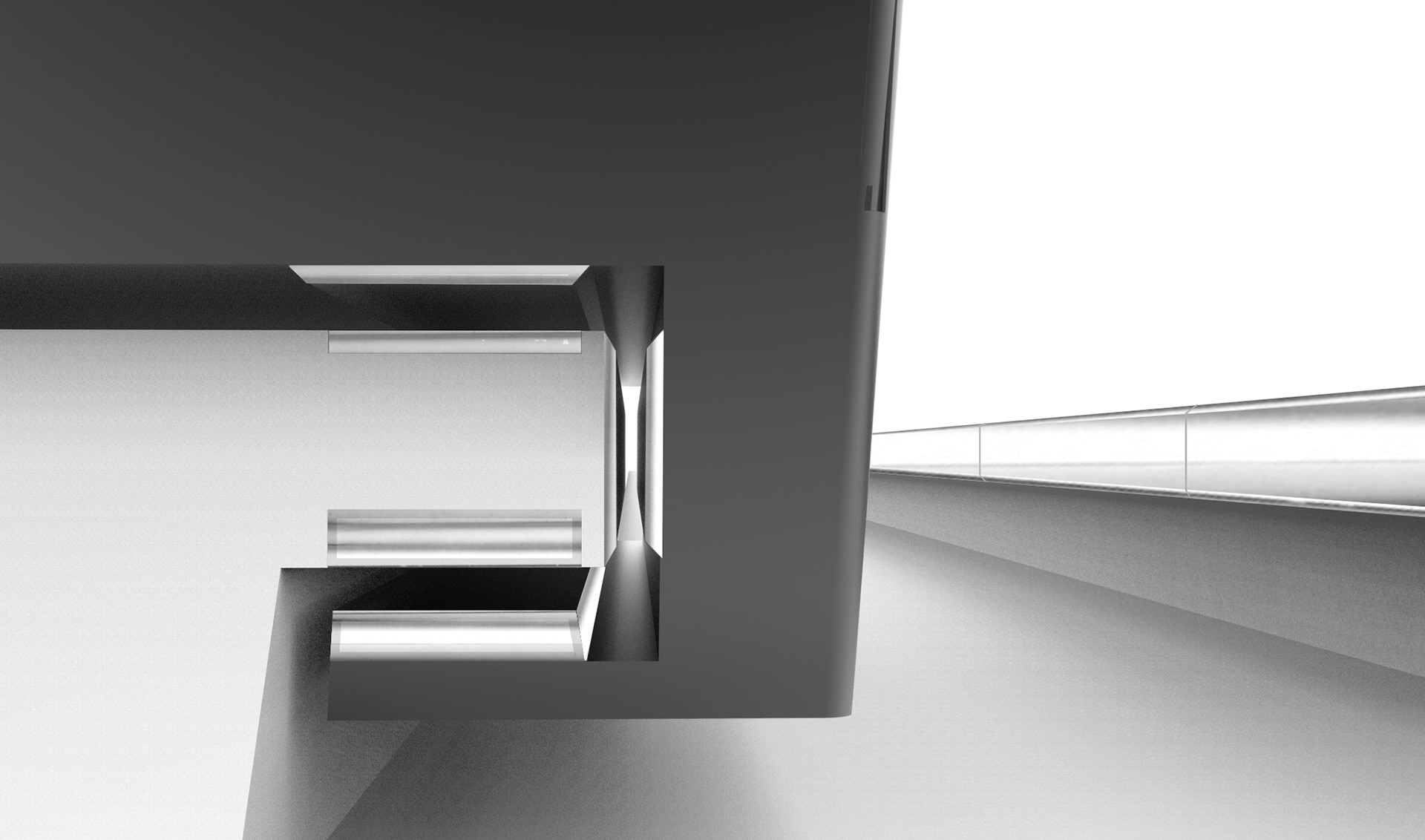
MagLev - Magnetic levitation technology.
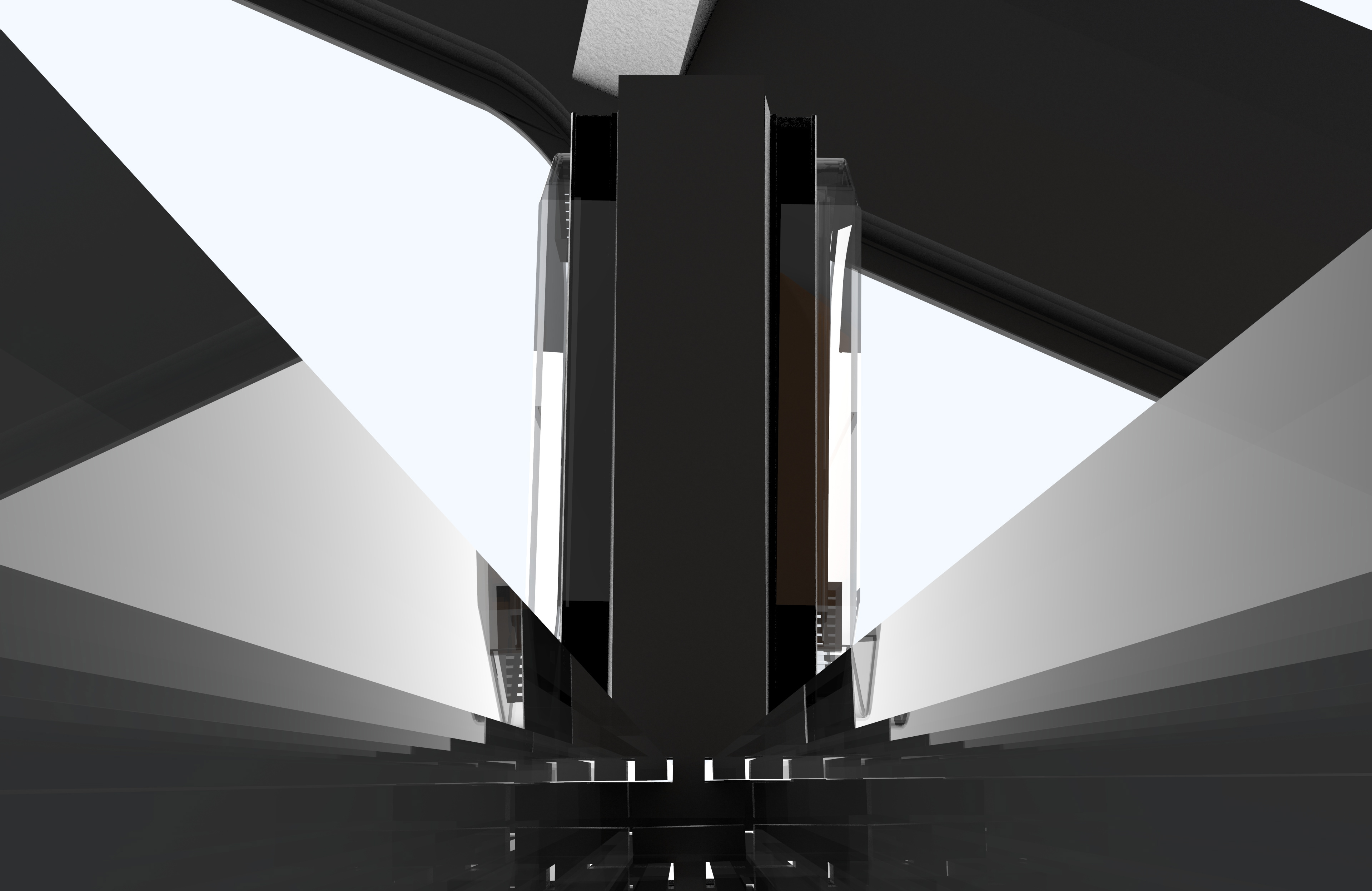
Inside the elevator.
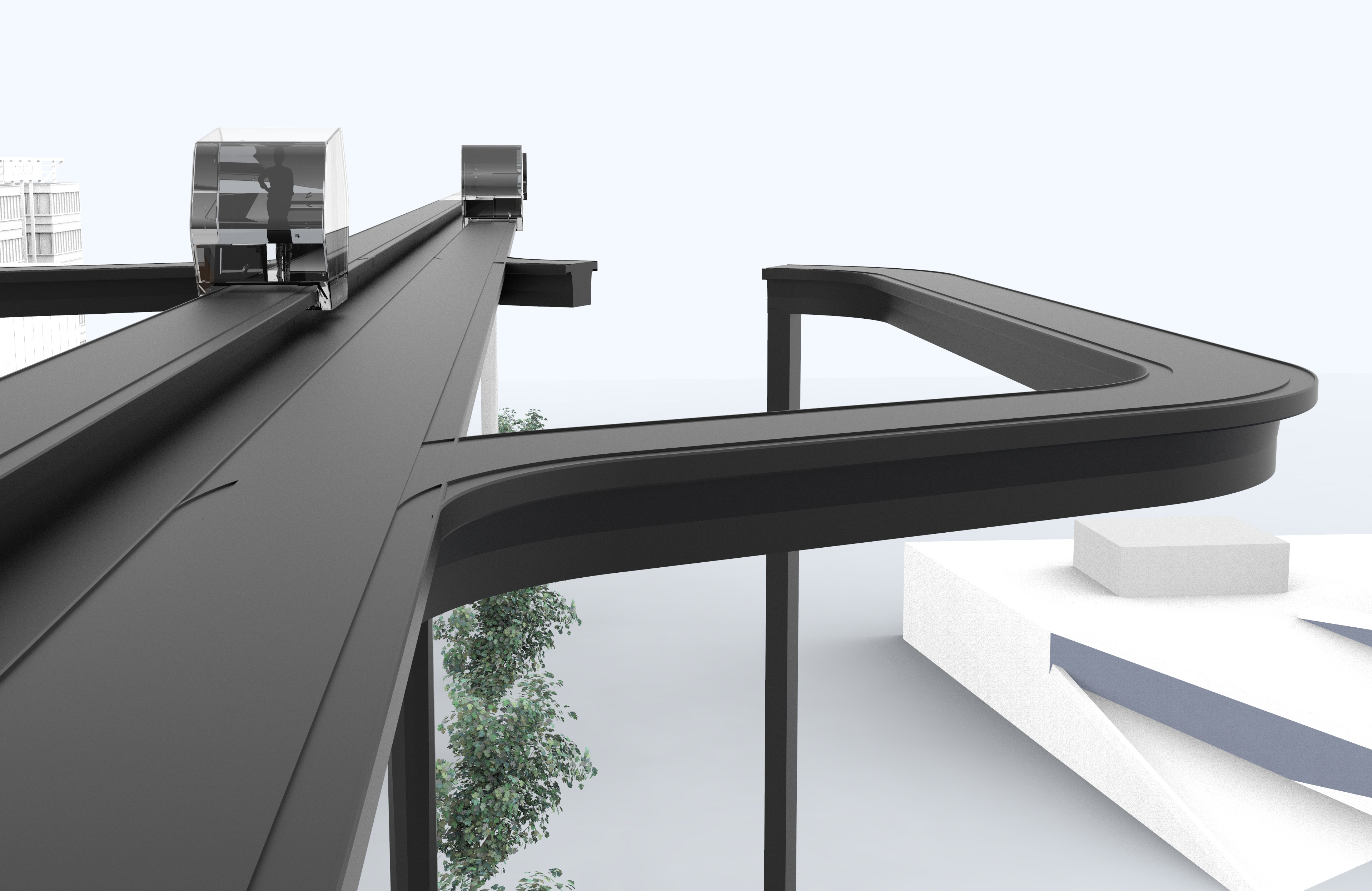
Top of track on a Luftlinjen stop.
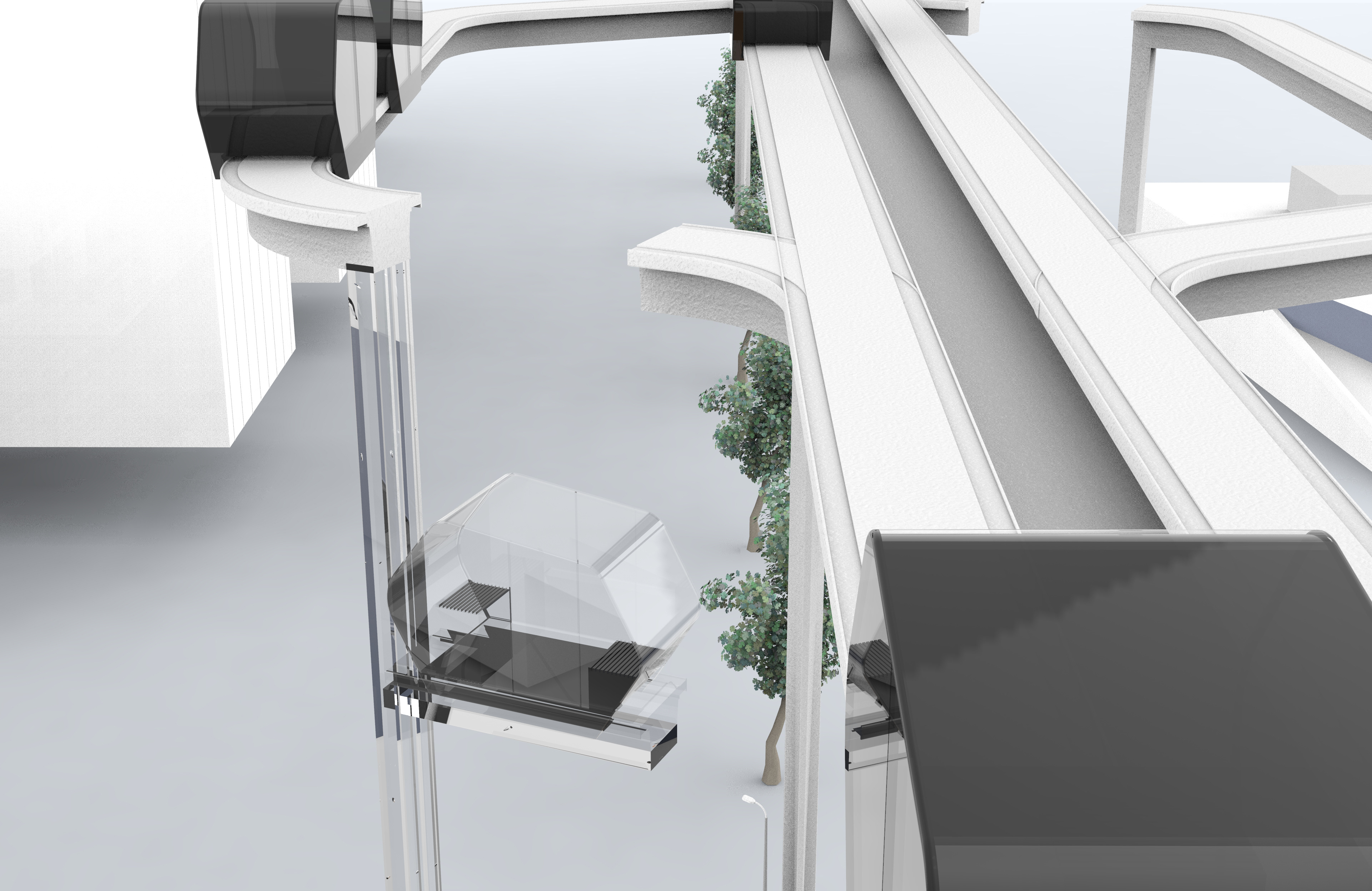
Elevator in glass - how it looks like inside
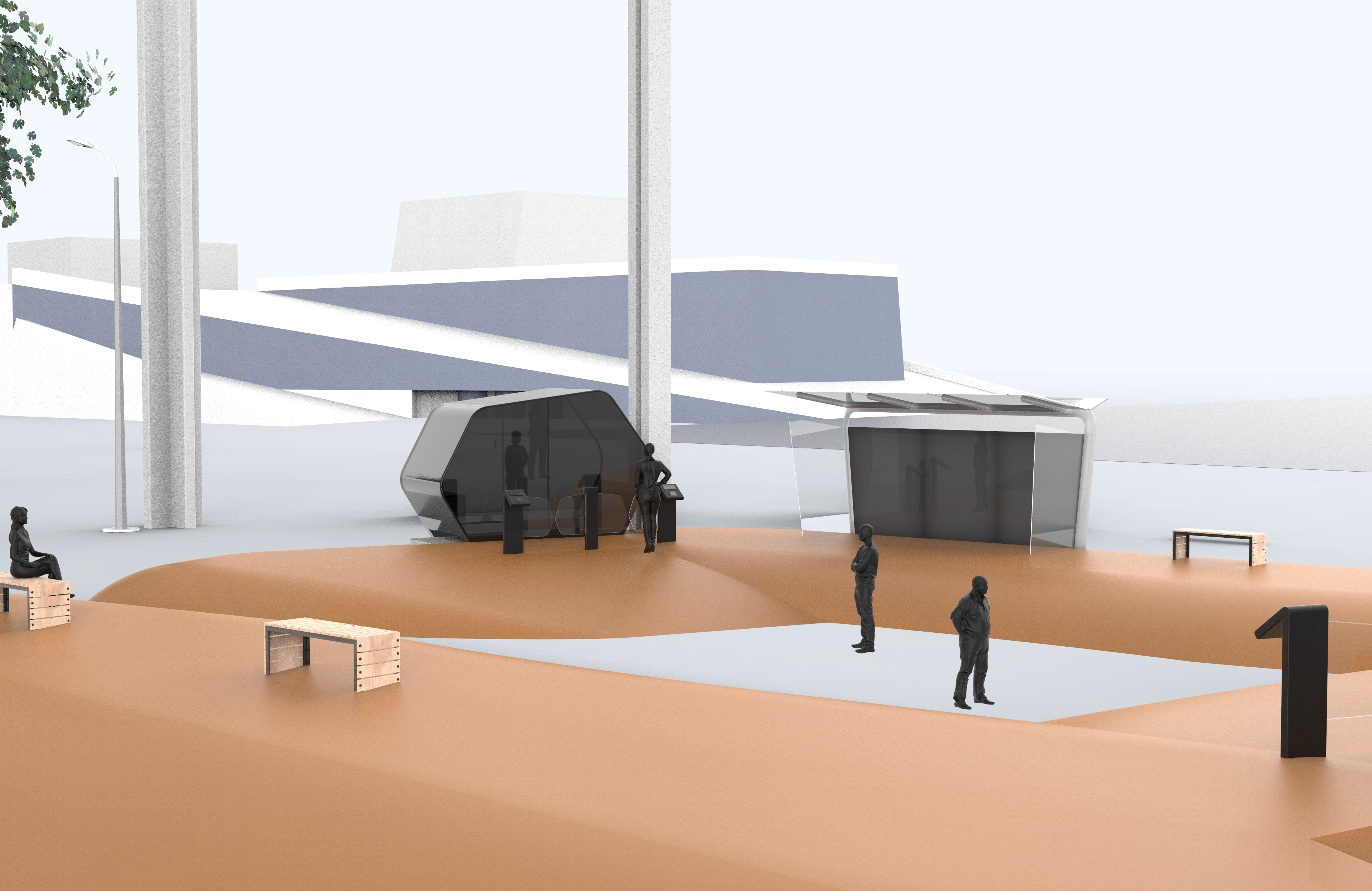
By making an open platform we create space where people can relax.
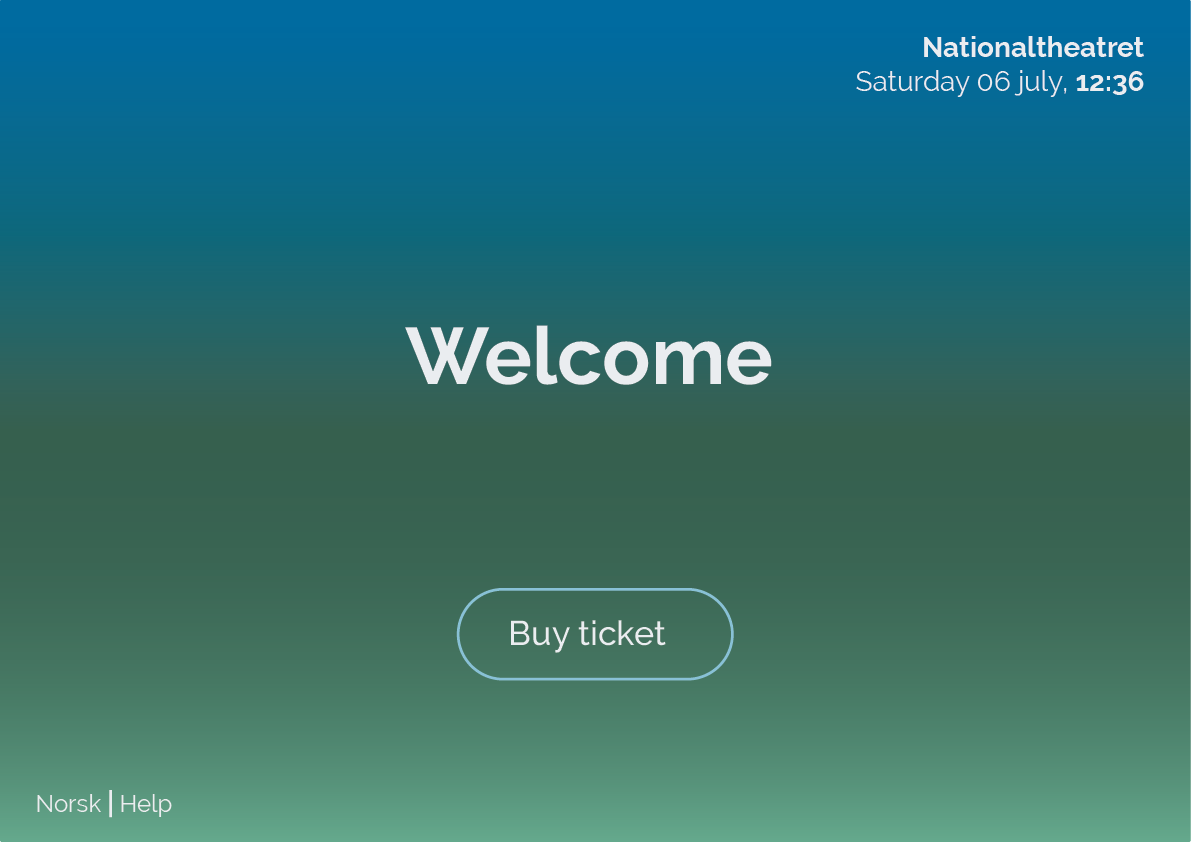
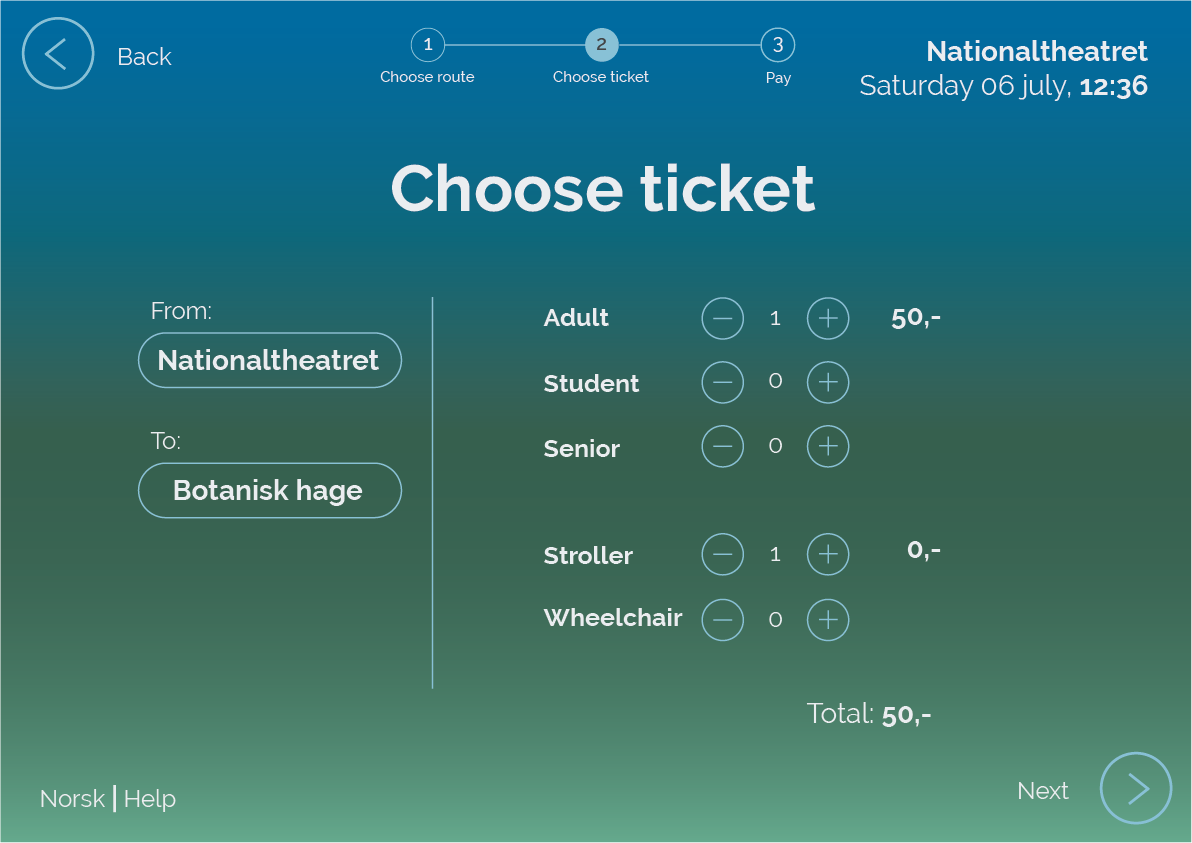
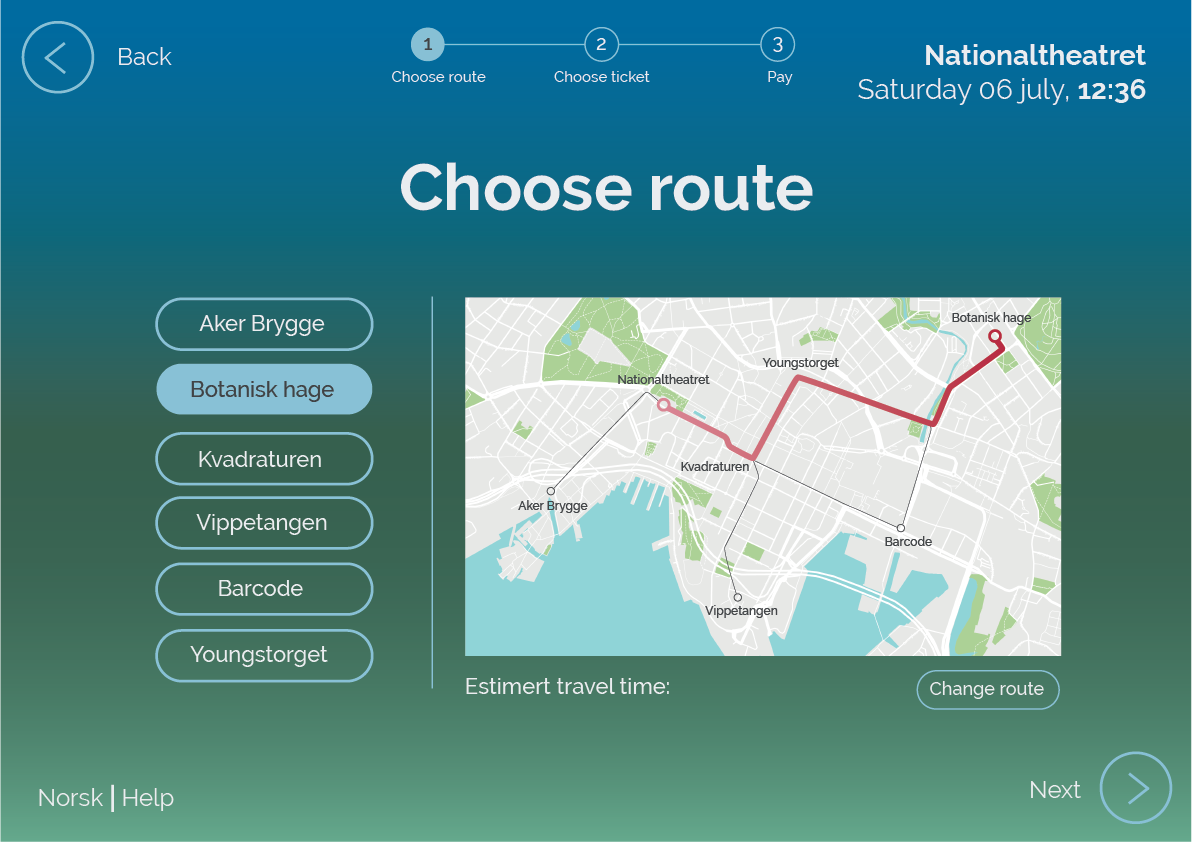
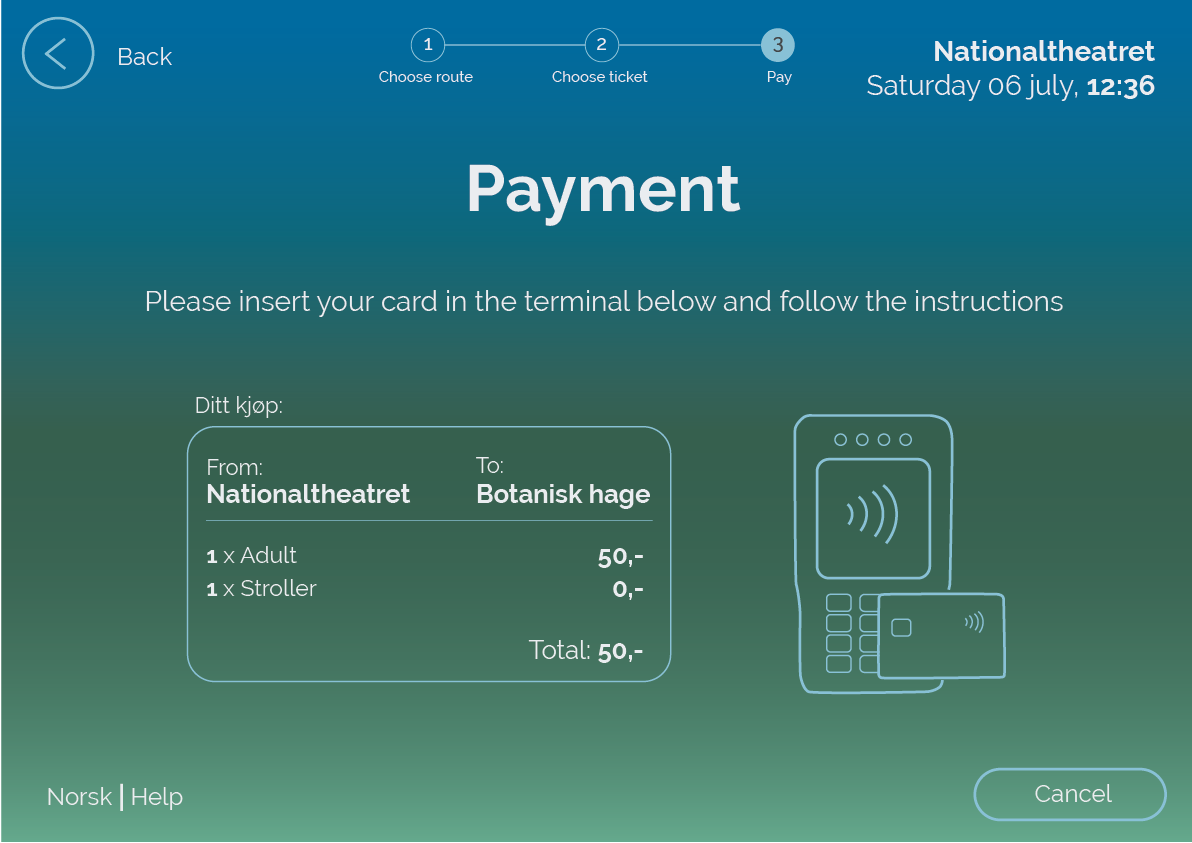
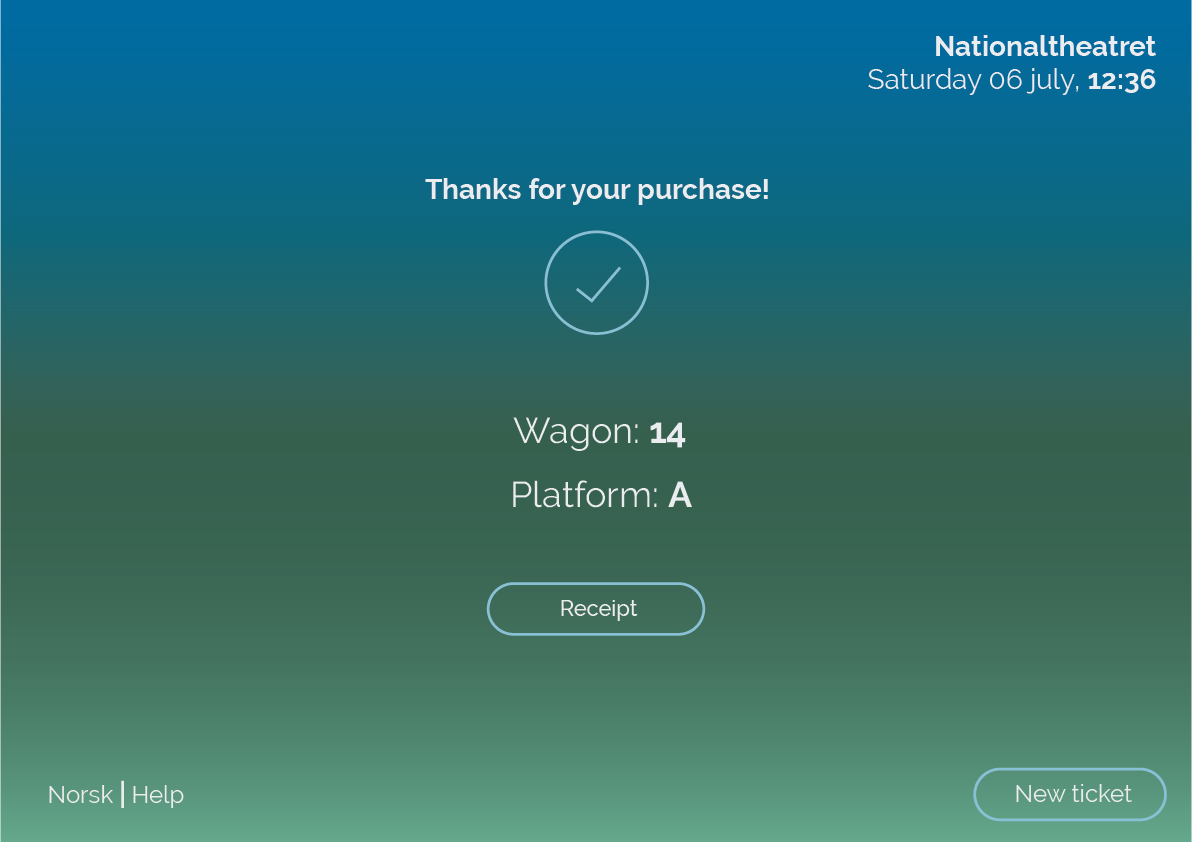
Wireframes - Ticket Machines
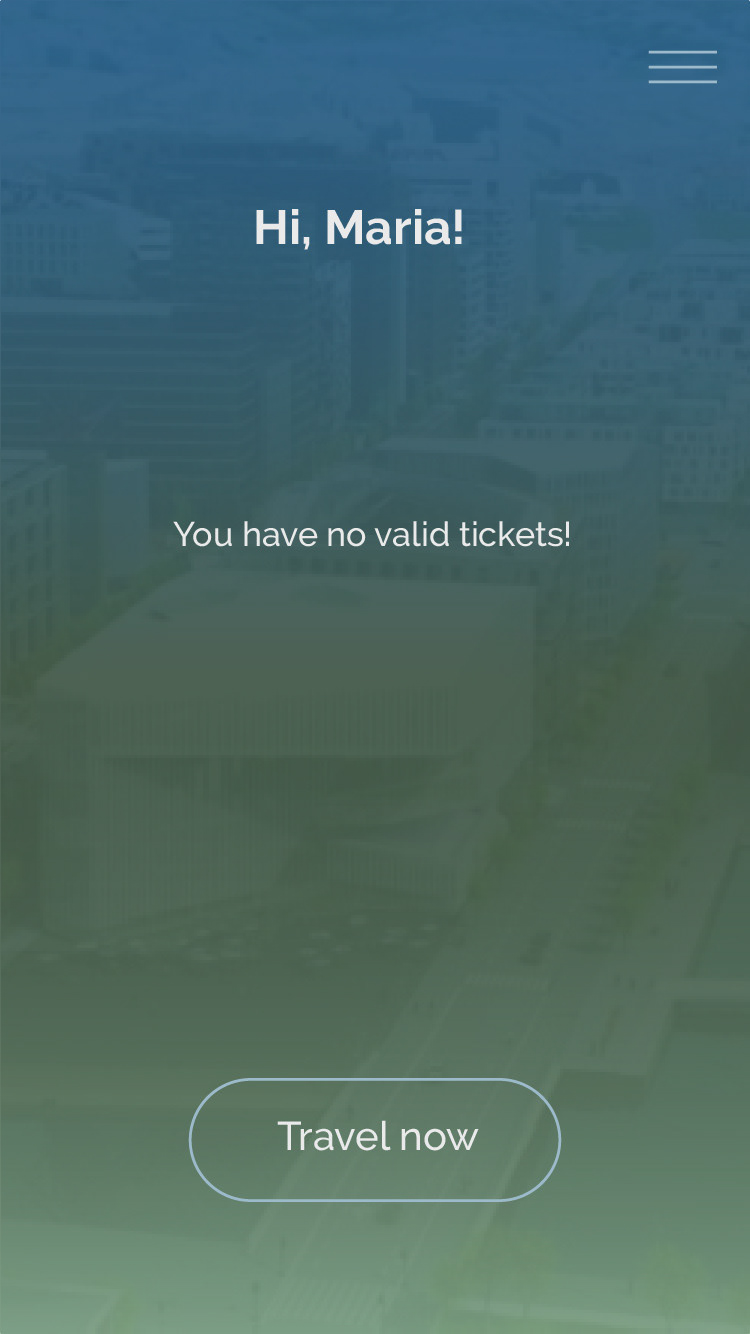
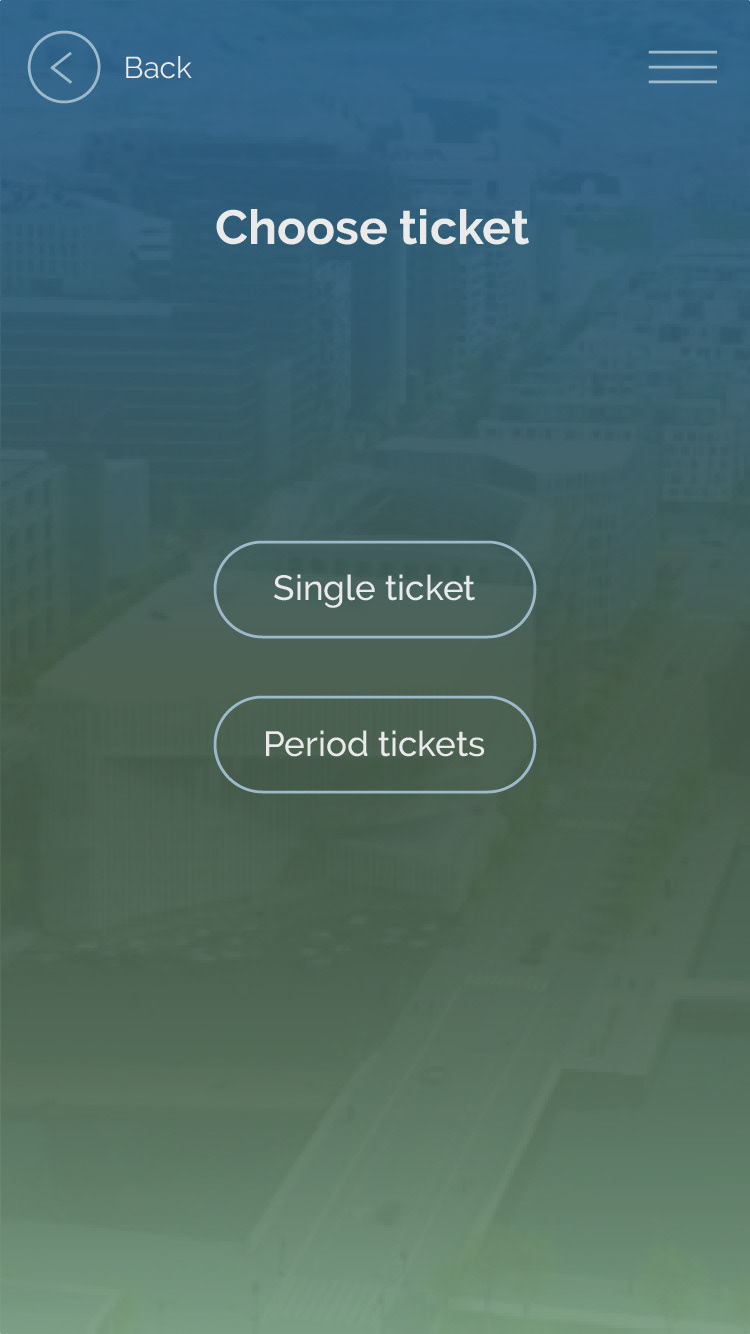
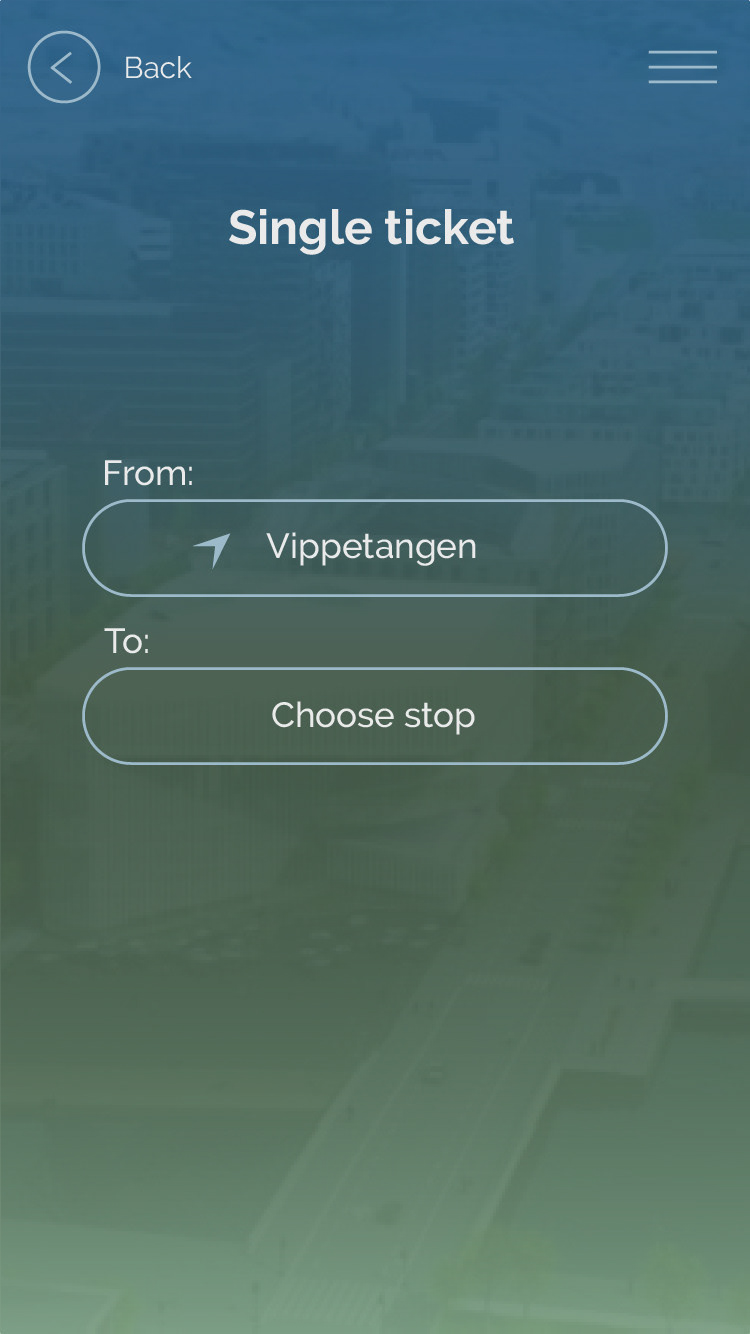
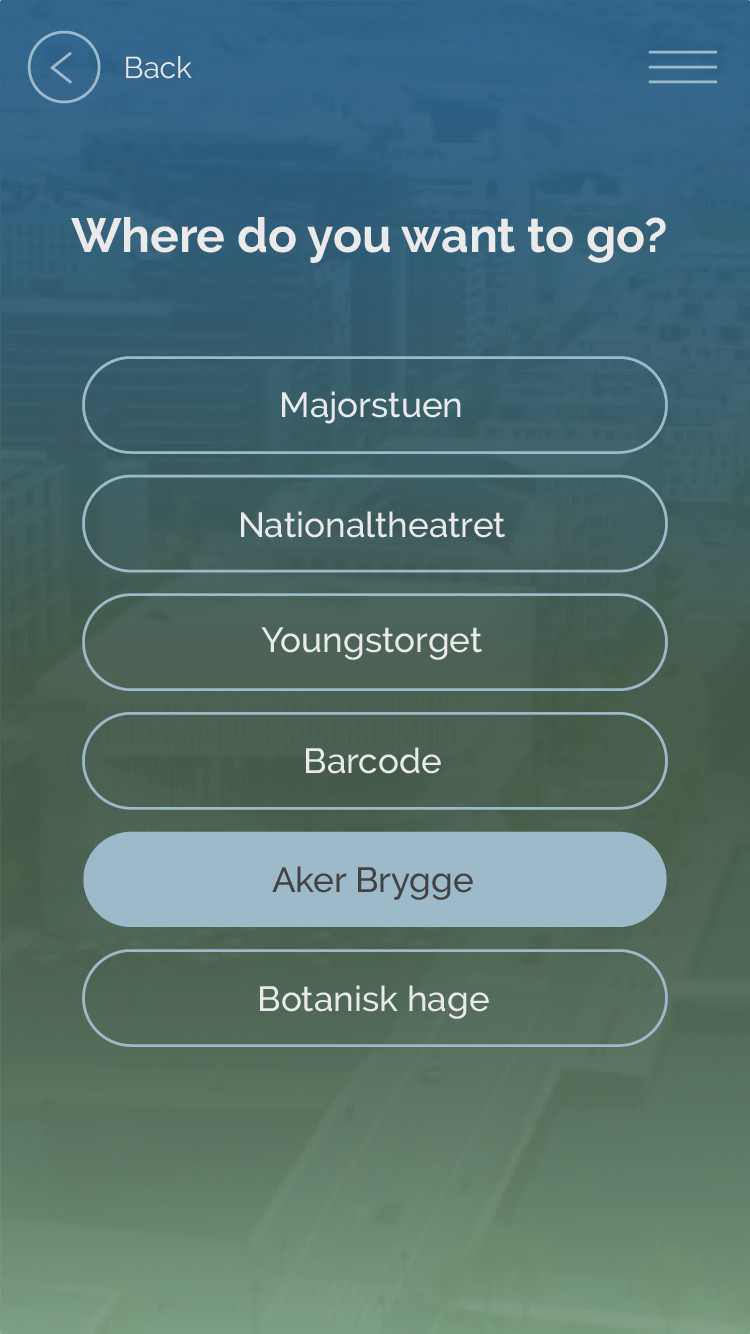
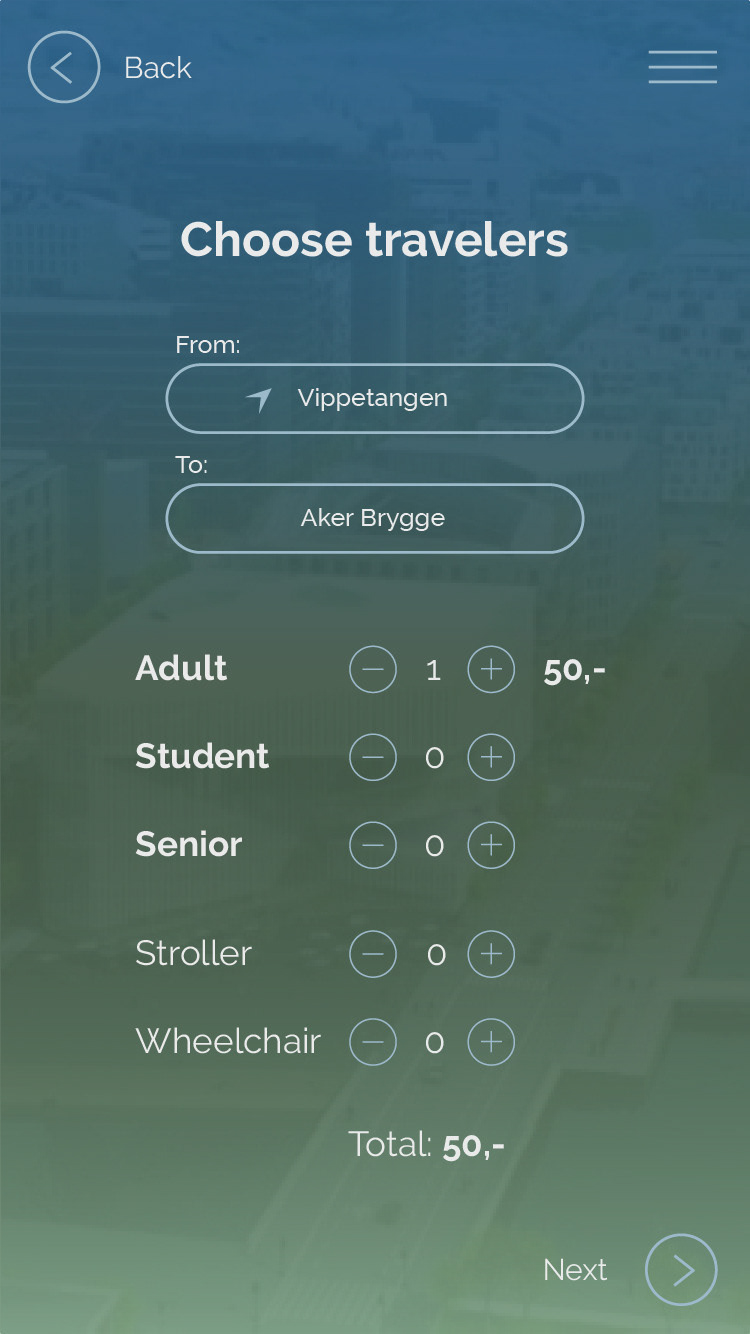
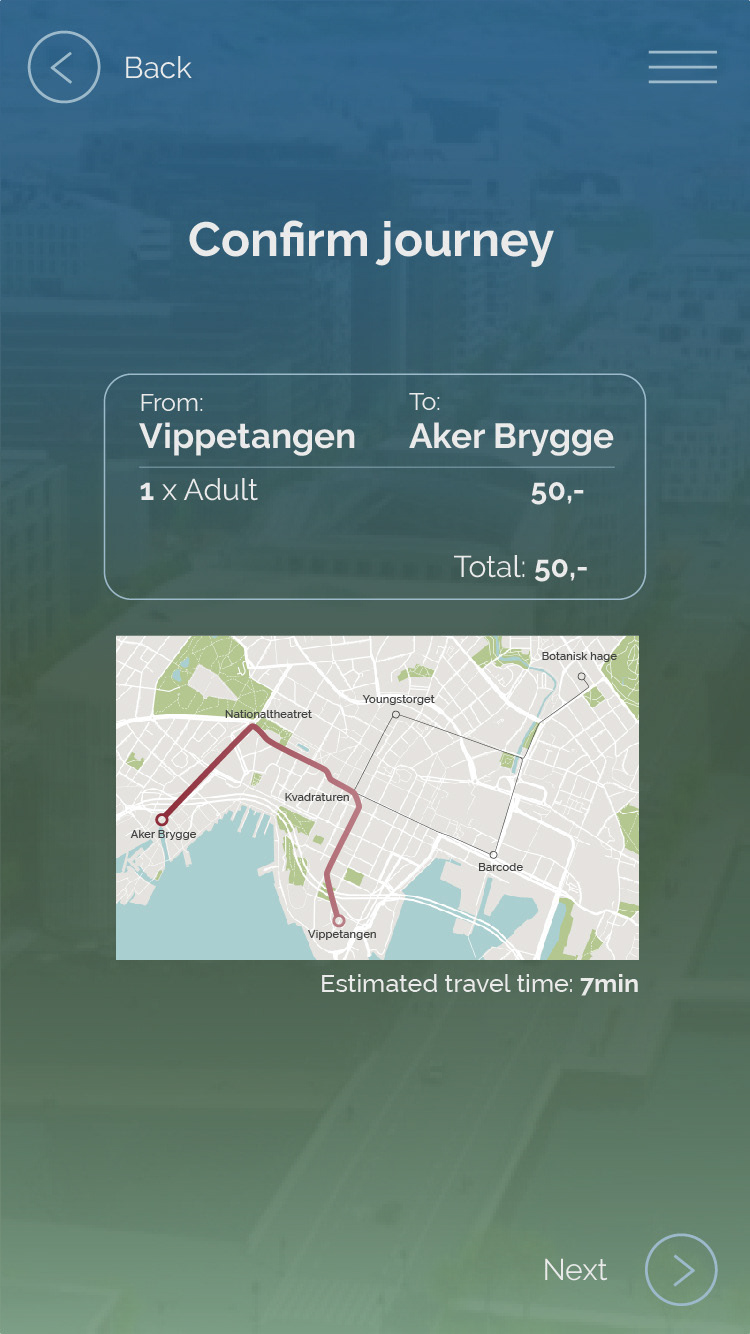
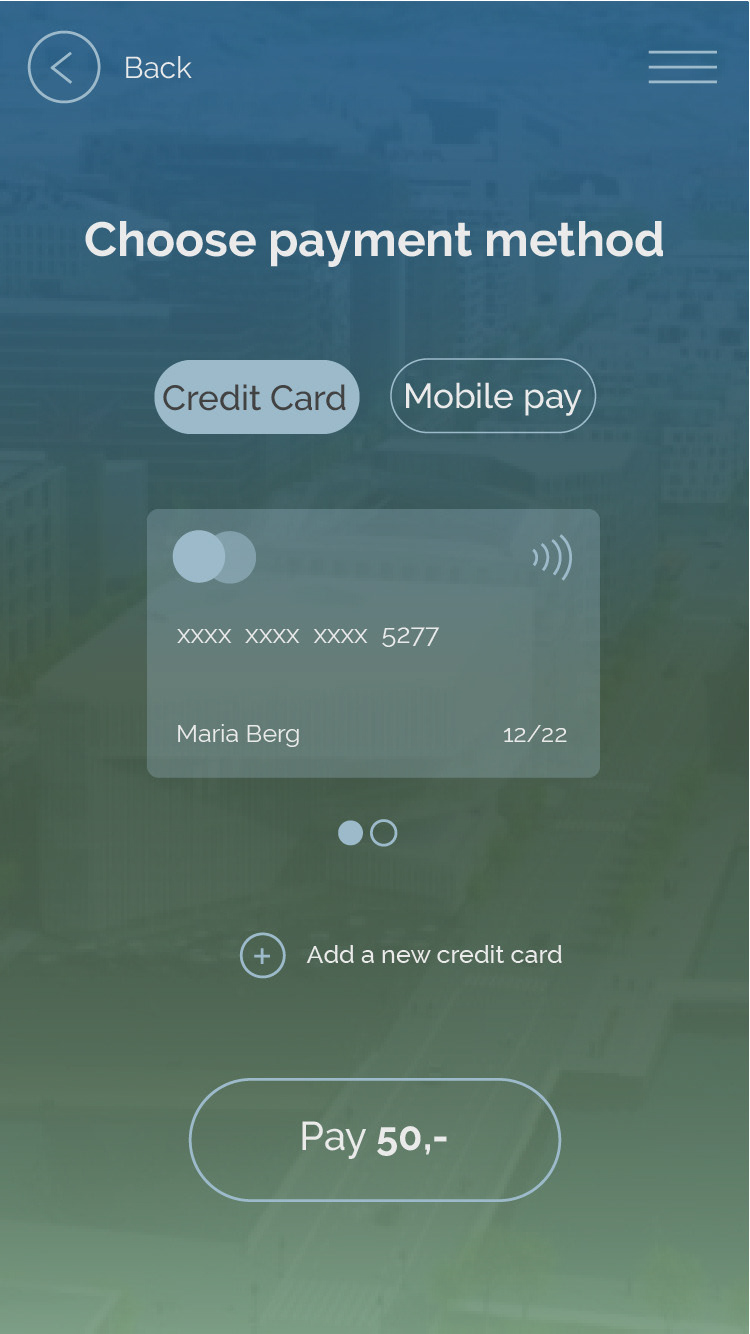
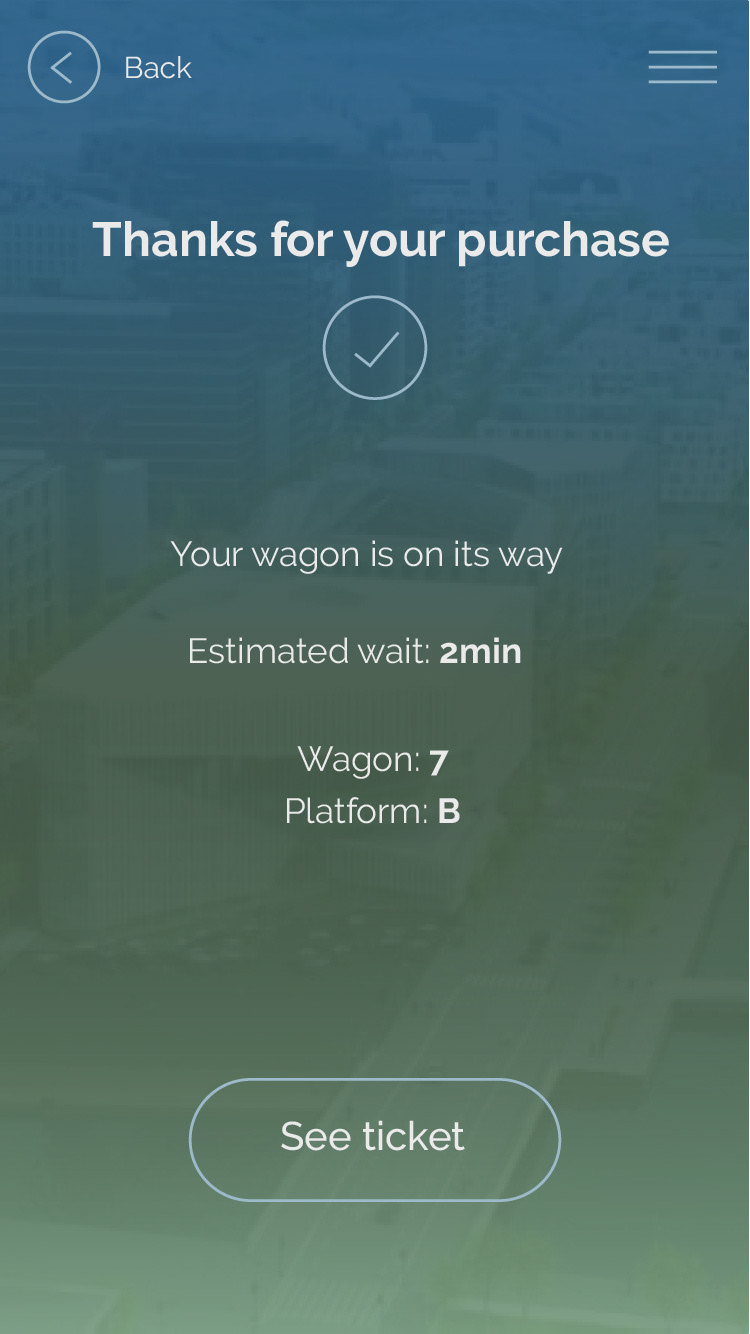
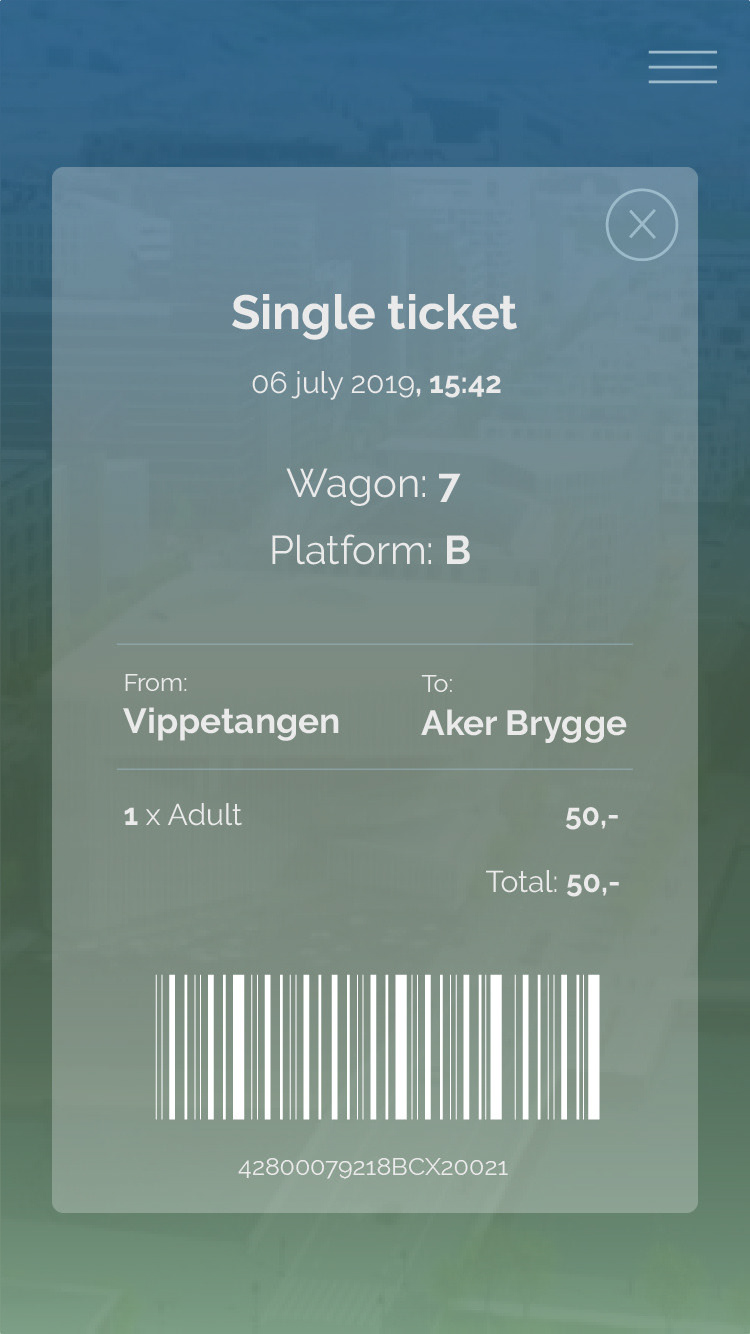
Wireframes - App
Animation on how it would look like when a Luftlinjen wagon passes by.
Lights at night